
Hi guys. I have run thermal testing of the PC Loaf using a mock setup (Latte was not very cooperative with me putting him on and off… so real cat testing will need to wait). The setup looked something like this:
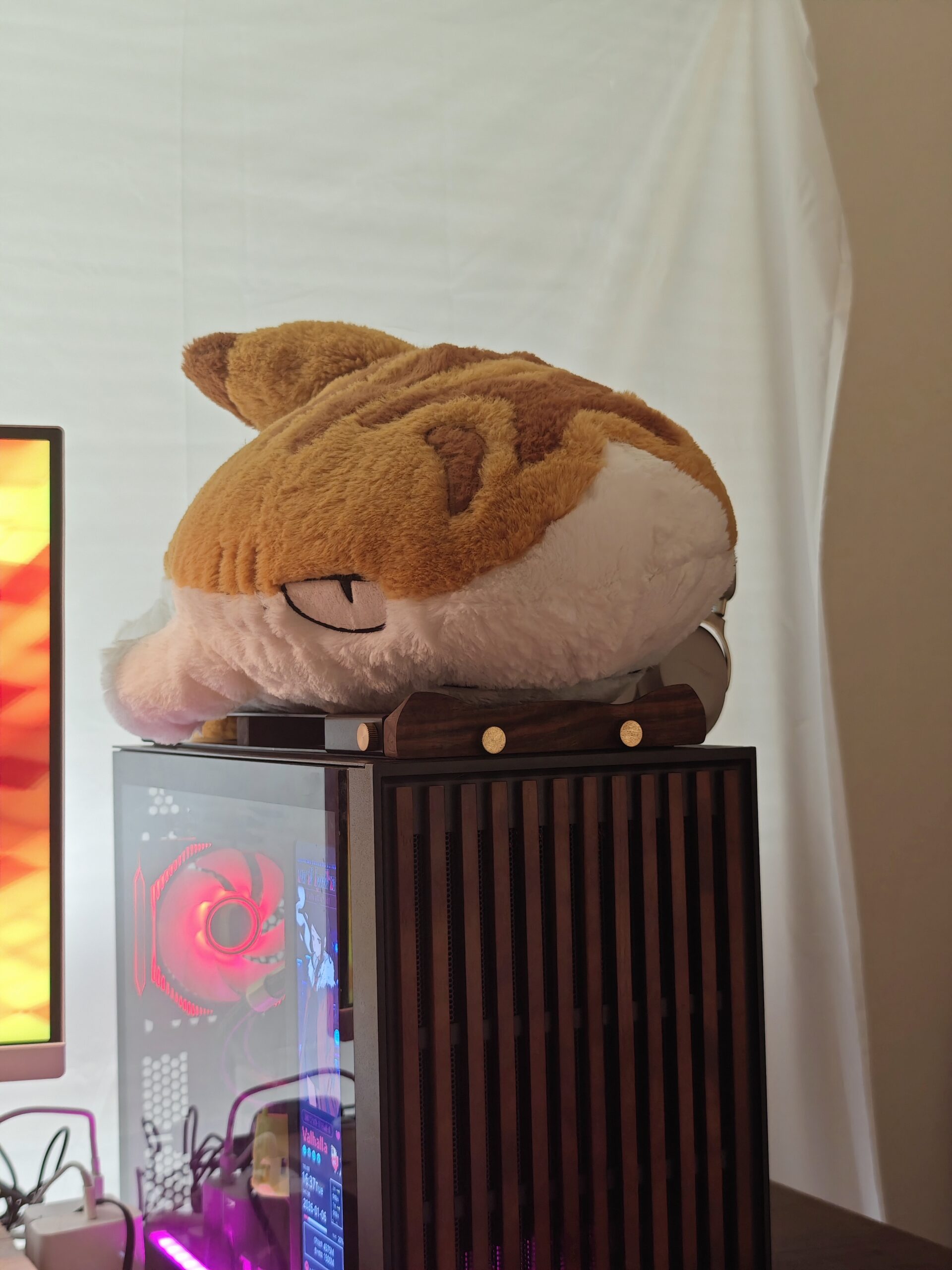
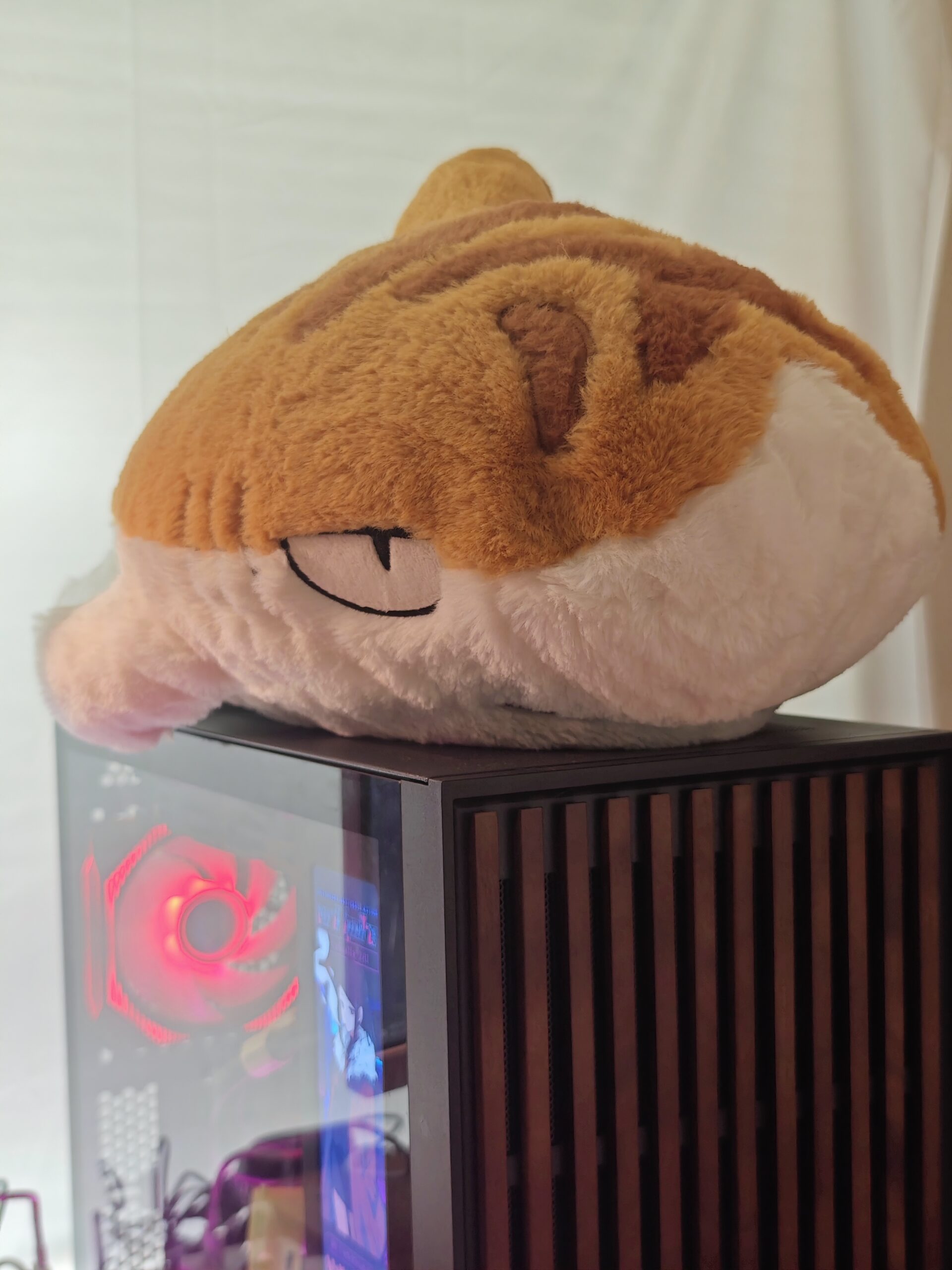
Testing conditions were the following for my computer:
| CPU | GPU | Case | Cooling | Cooling (cont.) | Cooling (cont.) | Ambient temperature | Test ran |
| Ryzen 7 5700X (65W) | RTX 3060TI (Gigabyte Gaming OC) (200W) | Shiny Snake G600 Black | Deep cool castle 240 – top exhaust | 120mm fan bottom intake, front passive intake | back exhaust fan disabled* | 32 degrees Celsius | Furmark 2.3.0 / Cinebench R23 |
GPU Tests:
Furmark 2.3.0 3440x1440P – 5 Minutes

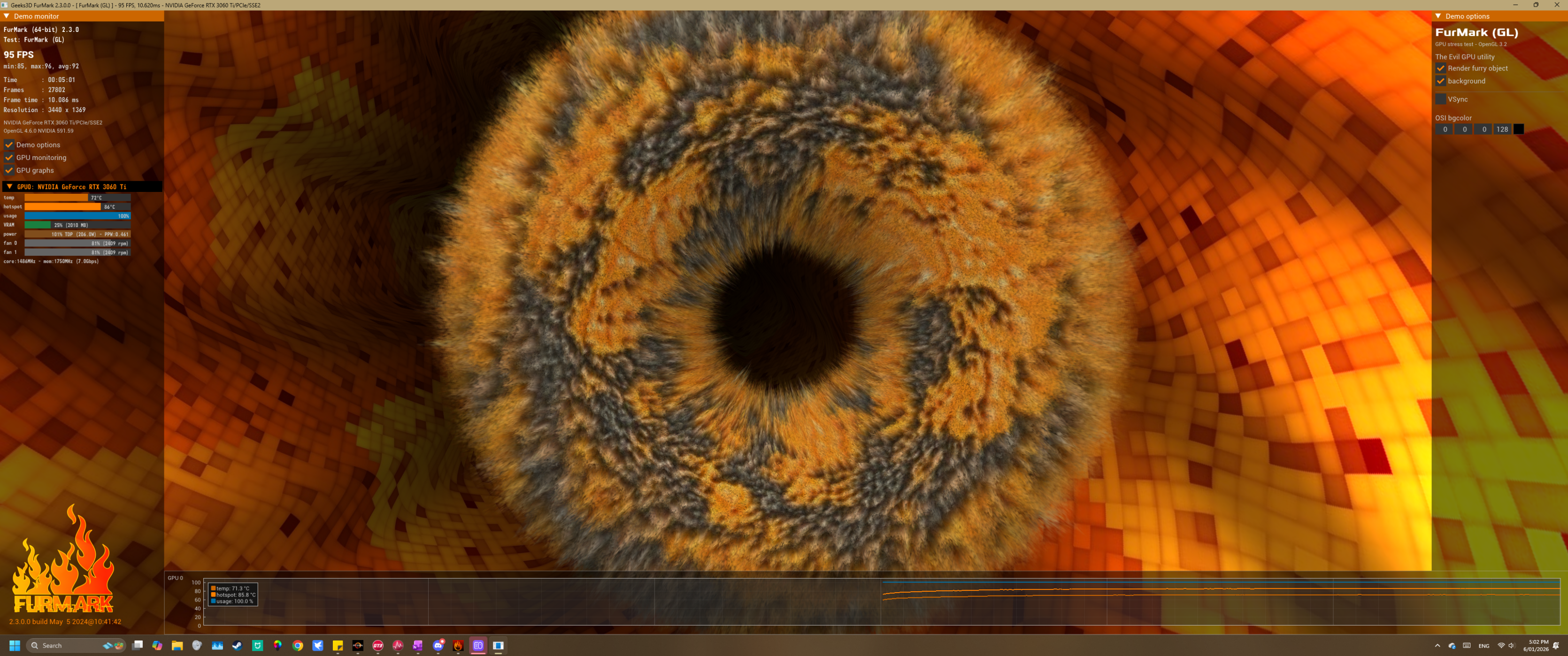
Result:
Very marginal differences in maximum temperatures and negligible differences in GPU performance. This is most likely due to the low thermal demand of the GPU used and no CPU testing occurring at the same time. Thermal throttling was not reached due to the low power GPU.
CPU tests
Cinebench R23 Standard Multicore benchmark – 10 Minutes
| With cat* | Max temperature: 89 Score: 13377 |
| Without cat | Max temperature: 80 Score: 13554 |
| With cat bed | Max temperature: 79 Score: 13614 |
Result:
Marginal performance increases compared to with a cat blocking the top vent Not too sure why this happened again… might be because ambient temperature dropped throughout the test period?
Conclusions
The Cat bed definitely improves thermal performance of computers with top exhaust configurations. However based on testing in my personal computer case, the effect on short term thermals and performance is negligible. This is likely due to the low thermal demand of my hardware (Using a low TDP CPU and a mid tier GPU), not utilising both CPU and GPU at the same time, and using a fairly open flow case, which has plenty of exhaust options other than the top ventilation. Further testing will be conducted.